A shooting range creates visual conditions that ordinary sunglasses are not designed to handle. Bright lighting, airborne particles, fragments from target materials, and sudden changes in the surrounding environment make protective eyewear an important part of range equipment. Shooting eye protection should be evaluated through lens impact resistance, coverage, optical clarity, fit, and resistance to fogging rather than appearance alone. At YIJIA Optical, we approach tactical eyewear from these practical requirements, with attention to how protective features affect visibility and comfort during extended outdoor or indoor use.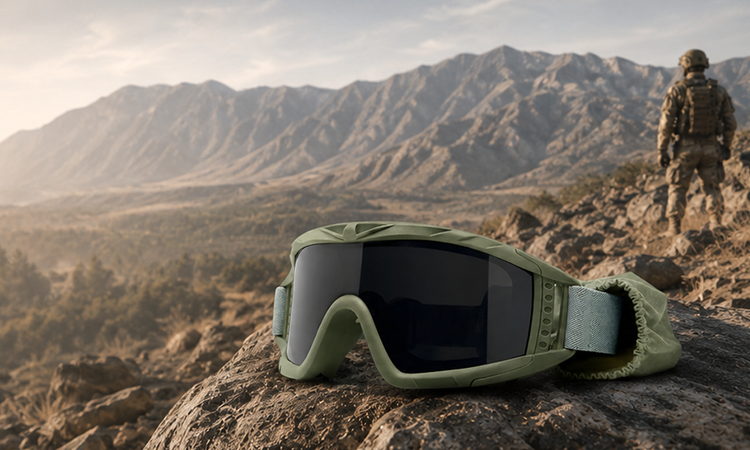
Why Ordinary Glasses Are Not Enough
Prescription glasses can correct vision, but vision correction and impact protection are separate functions. A regular pair may not provide sufficient coverage around the eyes or use lens materials intended for demanding protective applications.
The first consideration is the ability of the eyewear to provide a physical barrier. Best shooting glasses should be assessed according to their stated protective characteristics, particularly when the wearer may encounter unexpected particles or fragments in the surrounding environment.
Coverage also matters. A frame that leaves substantial gaps around the sides may provide less coverage than a design with broader lens protection. However, more coverage should not mean sacrificing visibility, because users still need a clear view of the surrounding environment.
What Makes a Protective Lens Useful?
Impact resistance is one of the most important characteristics of range eyewear. Protective lenses are commonly manufactured from materials selected for their ability to withstand impact while remaining relatively lightweight.
The specific protection level should always be checked against the manufacturer's stated specifications and applicable safety standards. For U.S. buyers, ANSI Z87.1 provides a baseline for high-mass and high-velocity impact, while military and law enforcement procurement often requires the more demanding MIL-PRF-32432A ballistic standard.
Shooting eye protection also needs optical clarity. Distortion, poor transparency, or an uncomfortable visual field can make eyewear distracting during prolonged wear. Clear vision is especially important when users need to observe targets, equipment, and other people in the range environment.
Lens color is another consideration. Clear lenses can suit lower-light environments, while tinted options may be more comfortable in bright outdoor conditions. The appropriate choice depends on lighting rather than simply selecting the darkest available lens.
How Fogging Affects Protective Eyewear
Fogging can occur when temperature and humidity differences cause condensation to form on the lens surface. Physical activity, warm air around the face, weather changes, and enclosed environments can all contribute to this problem.
A fogged lens can interfere with visibility even if its impact resistance is otherwise suitable. Best shooting glasses therefore need to balance protective coverage with airflow and anti-fog characteristics, especially when worn for extended periods.
Prescription users face an additional consideration. Tactical prescription goggles can combine vision correction with protective eyewear, reducing the need to place ordinary glasses underneath a separate protective frame. The exact prescription compatibility and optical configuration should be confirmed before use.
Fit and Coverage Should Work Together
A protective frame needs to remain stable without creating excessive pressure. Nose support, temple structure, lens position, and overall weight all influence how the eyewear feels after prolonged use.
Our tactical military goggles are developed for applications including military, law enforcement, outdoor activities, airsoft, paintball, and shooting sports. We focus on impact-resistant lenses, anti-fog performance, and clear vision, while OEM and ODM customization is available for projects requiring specific configurations. The purpose of these features is to combine protection and usability rather than simply increase the amount of material around the eyes.
Different facial shapes can also change the effectiveness of a particular frame. Shooting eye protection should sit securely while maintaining an unobstructed field of view, and users who wear prescription lenses should pay particular attention to compatibility, fit, and available corrective options.
How to Evaluate Eyewear Before Use
Start by checking the manufacturer's specifications instead of relying on visual appearance. Terms such as impact resistance, UV protection, anti-fog treatment, and prescription compatibility describe different characteristics, so one should not be interpreted as covering another.
The intended environment deserves equal attention. Indoor ranges may have different lighting and ventilation conditions from outdoor facilities, while changing weather can affect lens fogging and comfort. Best shooting glasses for one setting may not have the same practical advantages in another.
Finally, inspect the physical fit before use. The frame should remain comfortably positioned, the lenses should provide a sufficiently broad field of view, and the wearer should be able to see clearly without excessive pressure or distraction. At YIJIA Optical, we consider these factors together when developing protective eyewear, with the goal of making optical performance and physical protection work as complementary elements.
Conclusion
Protective eyewear at a shooting range involves much more than finding a pair of dark lenses that feels comfortable. Impact resistance, coverage, optical clarity, anti-fog performance, prescription compatibility, and fit each address a different requirement, and the appropriate combination depends on the environment and the wearer.
Our team at YIJIA Optical develops tactical eyewear around these practical considerations, while shooting eye protection remains something users should select according to documented specifications rather than appearance or marketing language. A thoughtful evaluation of the lens, frame, fit, and intended setting provides a more useful basis for protective eyewear selection.

