A lens can remain optically clear while still becoming difficult to use after repeated contact with fingers, gloves, or skin oils. For magnetic snow goggles, surface contamination is particularly relevant because interchangeable-lens systems may require more frequent lens handling, making routine surface maintenance an important consideration. At YIJIA Optical, we consider lens-surface behavior alongside frame construction, optical performance, and practical handling rather than viewing coating technology as a purely cosmetic feature.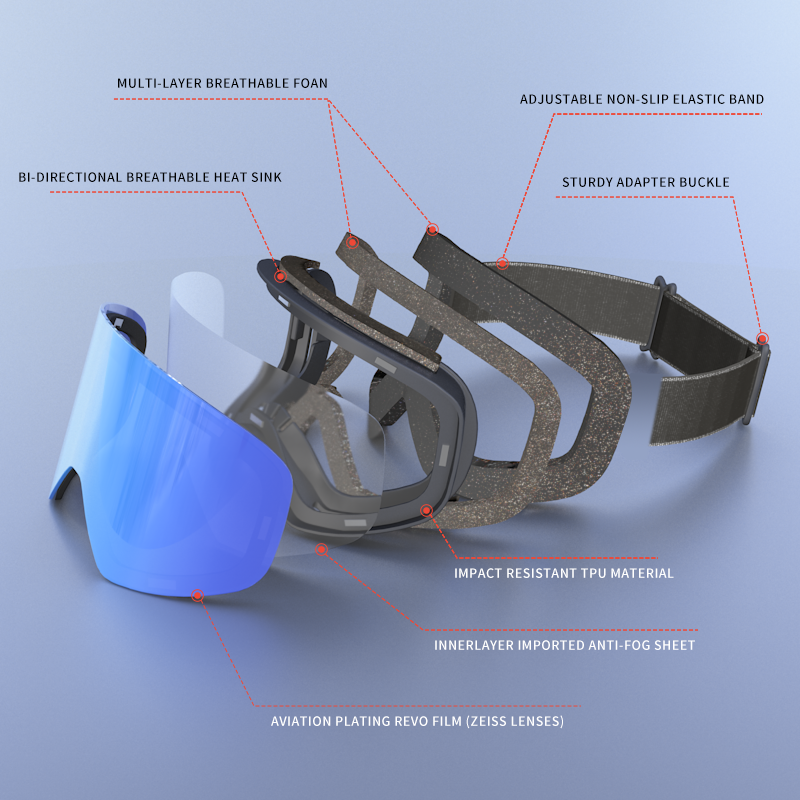
Fingerprints contain oils, moisture, and other residues that can spread across a lens surface. Even a thin film may produce uneven reflections, particularly under strong sunlight or artificial lighting. On snow, where surrounding surfaces can already create substantial reflected brightness, these smudges may become more noticeable.
The problem is not limited to appearance. Grease can attract dust and make subsequent cleaning more difficult, while repeated wiping may introduce fine abrasions if unsuitable materials are used. A surface that allows contaminants to be removed more easily can therefore contribute to simpler lens maintenance over the useful life of the eyewear.
For clear snowboard goggles, maintaining a clean optical surface can help preserve consistent light transmission and visual clarity
An oleophobic coating is designed to reduce the tendency of oily substances to spread and adhere strongly to a treated surface. The technology typically relies on modifying the surface characteristics so that contaminants form smaller droplets or remain easier to remove rather than creating a broad greasy film.
This does not mean that fingerprints cannot appear. Instead, the practical objective is to make oily residues less persistent and simplify cleaning. The coating's effectiveness depends on its formulation, application process, substrate compatibility, and how the finished lens is handled after production.
Understanding that distinction is important for product development because coating technology should be evaluated according to its actual function rather than treated as an all-purpose surface treatment.
A surface treatment has to work with the lens material beneath it. Polycarbonate, for example, is widely used in sports eyewear because it can provide a useful combination of low weight and impact resistance, but its surface characteristics differ from those of other optical materials. The coating process must therefore be compatible with the substrate and the intended lens construction.
The YH693 offers an example of a frameless ski-goggle platform built around a flexible TPU frame. Its design also supports practical lens handling considerations, illustrating how surface treatment can be evaluated alongside the overall eyewear construction. These structural details illustrate why surface treatment cannot be considered separately from the complete eyewear system.
For magnetic snow goggles, interchangeable lenses can also introduce additional handling requirements. The more frequently a lens is touched, the more useful a surface that facilitates routine cleaning may become.
A durable optical system depends on the compatibility of its individual layers, not merely the presence of a specialized coating.
Even a treated surface needs appropriate care. Using abrasive materials, excessive pressure, or unsuitable cleaning chemicals may affect coatings over time. A practical maintenance routine generally starts with removing loose particles before wiping, since rubbing dry grit directly against the lens can create unnecessary surface wear.
Storage has a similar influence. Leaving goggles exposed in a bag alongside hard equipment can cause contact marks or scratches, while placing a wet lens into an enclosed space may contribute to moisture-related issues. Product instructions should therefore explain not only the coating's intended function but also reasonable care practices.
For clear snowboard goggles, this becomes particularly relevant because users tend to notice changes in optical clarity immediately. A clean lens supports better visual consistency, while careful handling helps preserve the condition of the optical surface.
The coating is one part of maintenance; user behavior remains another.
Sports goggles face a different operating environment from everyday optical glasses. Snow, dust, gloves, temperature changes, sunscreen, and frequent adjustments can all expose the lens to contamination. Product developers therefore need to consider how the eyewear will actually be handled rather than evaluating surface properties under laboratory conditions alone.
At YIJIA Optical, we approach sports-eyewear development through the interaction of frame materials, lens options, fit, and customization requirements. For brands developing magnetic snow goggles, that means considering how lens handling, interchangeable configurations, and surface characteristics fit together within the intended product experience.
The same reasoning can be applied to different outdoor categories. A coating selected for a snow product may have different priorities from one developed for cycling, motocross, tactical use, or industrial protection. Application conditions should guide the technical choices.
A useful development process begins with the user's environment and works backward toward the appropriate surface technology.
Fingerprint resistance is ultimately a practical aspect of optical maintenance rather than merely a cosmetic feature. Oleophobic treatment can make oily residues easier to manage, but its value depends on the lens substrate, coating formulation, manufacturing process, and cleaning habits that surround it. Brands developing clear snowboard goggles can therefore assess surface technology as one component within a broader lens-care strategy.
At YIJIA Optical, we consider these relationships while developing sports eyewear for different applications. The YH693 combines a customizable TPU frame with practical structural features, demonstrating how surface considerations can be evaluated alongside overall eyewear design requirements. A thoughtfully selected coating can add practical value, while appropriate lens care helps preserve that benefit throughout regular use.

