Clear vision can become surprisingly difficult once a helmet, protective eyewear, body heat, and physical exertion occupy the same space around the face. Anti fog shooting goggles can help manage condensation, but fogging rarely comes from one cause alone.
Airflow, humidity, lens temperature, facial fit, and headgear geometry all influence what happens inside the goggle. At YIJIA Optical, we approach this issue by considering the interaction between these elements rather than treating anti-fog performance as an isolated lens feature.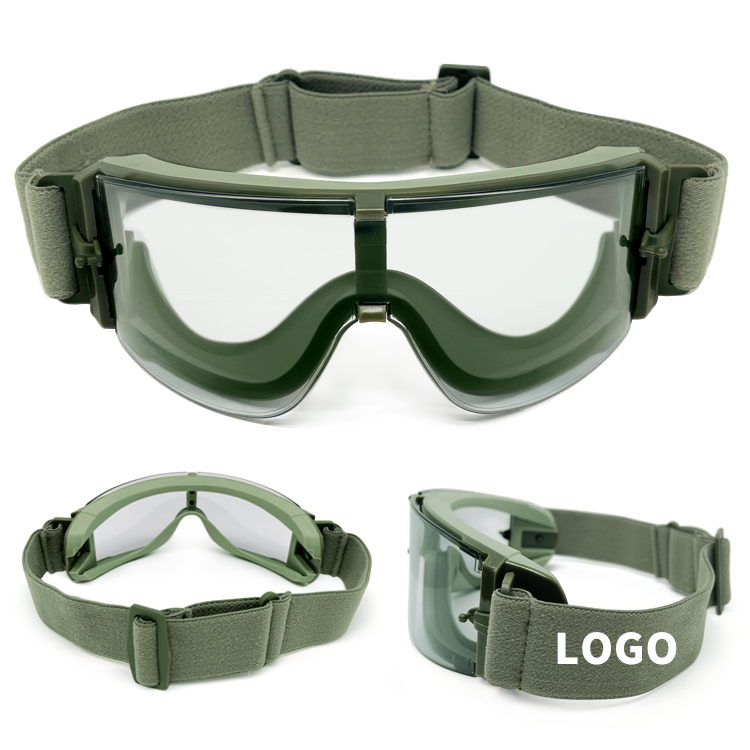
Condensation develops when moisture-rich air encounters a surface that is cool enough for water vapor to form droplets. During outdoor training, the air inside protective eyewear can become warmer and more humid because of breathing and physical activity. A cold lens surface then provides a place where that moisture can collect.
Helmet use can intensify the problem by changing the movement of air around the forehead and upper face. Depending on the helmet structure, vents and gaps may redirect warm air toward the eyewear or reduce the space available for moisture to escape.
Temperature differences also matter. A large gap between the external environment and the interior of the goggle can encourage condensation, particularly during transitions between intense movement and rest. Understanding this thermal relationship helps explain why anti fog shooting goggles rely on more than a surface treatment alone.
Anti-fog treatments are designed to change how moisture behaves on the lens. Instead of allowing numerous small droplets to remain as distinct beads that scatter incoming light, an appropriate treatment can encourage moisture to spread more evenly across the surface.
Other lens functions address different environmental demands. UV400 protection relates to ultraviolet exposure, anti-scratch treatment supports surface durability, and impact resistance concerns physical protection. Combining these functions can create a more versatile optical assembly, but each feature should still be evaluated according to its individual purpose. Maintaining anti-fog performance should not compromise the lens's baseline protective rating, such as ANSI Z87.1 or EN ISO 16321-1:2022.
Our RK5 Ballistic Eyewear uses a reinforced HD polycarbonate lens with UV400 protection, anti-fog, anti-scratch, high-definition vision, and impact-resistant performance. Its TPR and PC frame combines flexibility with lightweight comfort, while the ergonomic construction supports stable wear with headgear. Military green, black, and khaki are available for different tactical and OEM applications.
A treated lens can still fog if humid air remains trapped inside the frame. Ventilation creates a path for that moisture to move away from the optical surface, making airflow an important part of the overall design.
The position of ventilation openings matters because uncontrolled airflow can introduce dust or create discomfort, while insufficient circulation may allow humidity to accumulate. Good ventilation is consequently a balance between moisture exchange and environmental protection.
Headgear can alter that balance. Helmet compatible goggles need enough clearance and suitable geometry to work with the helmet rather than having their airflow channels blocked by surrounding equipment. A physical fit check should consider both dimensions and the way air travels around the combined setup.
Facial fit affects fogging in less obvious ways. Foam thickness, frame shape, and the distance between the lens and face determine how much internal air is present and where warm air can circulate. Excessive pressure may be uncomfortable, while an inconsistent seal can create unpredictable airflow.
Movement introduces further variation. Running, shooting practice, field exercises, and outdoor activities can shift the frame slightly as the wearer moves. A stable ergonomic structure helps maintain a more consistent relationship between the face, lens, and surrounding equipment.
For this reason, Helmet compatible goggles should be assessed with the actual headgear configuration rather than tested as standalone eyewear only. Compatibility involves more than fitting underneath a helmet; the combination should remain stable without interfering unnecessarily with ventilation or other equipment.
Small habits can support the optical design. Keeping ventilation areas clear, avoiding unnecessary contact with the inner lens, and allowing damp eyewear to dry naturally can help preserve the intended condition of the lens surface.
The surrounding equipment deserves attention too. A helmet strap, face covering, or other accessory positioned across a ventilation opening can change airflow considerably. Checking these contact points before active use may reveal a simple source of recurring condensation.
Activity patterns also influence internal humidity. Extended periods of intense movement generate more heat and moisture than light activity, while sudden stops can change the temperature around the face. Anti fog shooting goggles work within these changing conditions, so practical use habits remain relevant even with specialized lens treatments.
A useful evaluation should consider the entire protective arrangement rather than focusing exclusively on the lens. Check whether the frame stays stable, whether the helmet presses against the goggle, and whether ventilation remains unobstructed after all equipment is worn together.
Optical performance should receive equal attention. High-definition vision, impact resistance, UV protection, scratch resistance, and fog management each address different aspects of outdoor use. A specification sheet becomes more meaningful when these functions are connected to the actual environment.
At YIJIA Optical, we consider Helmet compatible goggles through this combined perspective, examining frame construction, lens characteristics, fit, and integration with headgear during development. The objective is not to assign one feature responsibility for every visibility problem, but to understand how the components influence one another.
Fogging is ultimately a moisture-management problem shaped by temperature, airflow, fit, and activity. A suitable lens treatment can help control condensation at the optical surface, yet ventilation and headgear compatibility determine whether humid air can move away effectively.
Our team at YIJIA Optical applies this broader view when developing anti fog shooting goggles, particularly for applications that involve helmets and active movement. With the same principle, helmet compatible goggles should be assessed as part of the complete protective setup, where optical clarity, frame stability, airflow, and equipment integration all have a practical role.
