Road glare can become surprisingly tiring during a long ride. Sunlight reflecting from wet pavement, vehicle surfaces, water, or pale concrete may create bright areas that compete with the visual details cyclists need to monitor. Polarized cycling glasses can reduce certain forms of reflected glare, but that does not make polarization necessary for every rider or every route. At YIJIA Optical, we consider lens function together with riding conditions, light levels, fit, and overall optical performance rather than treating polarization as a universal requirement.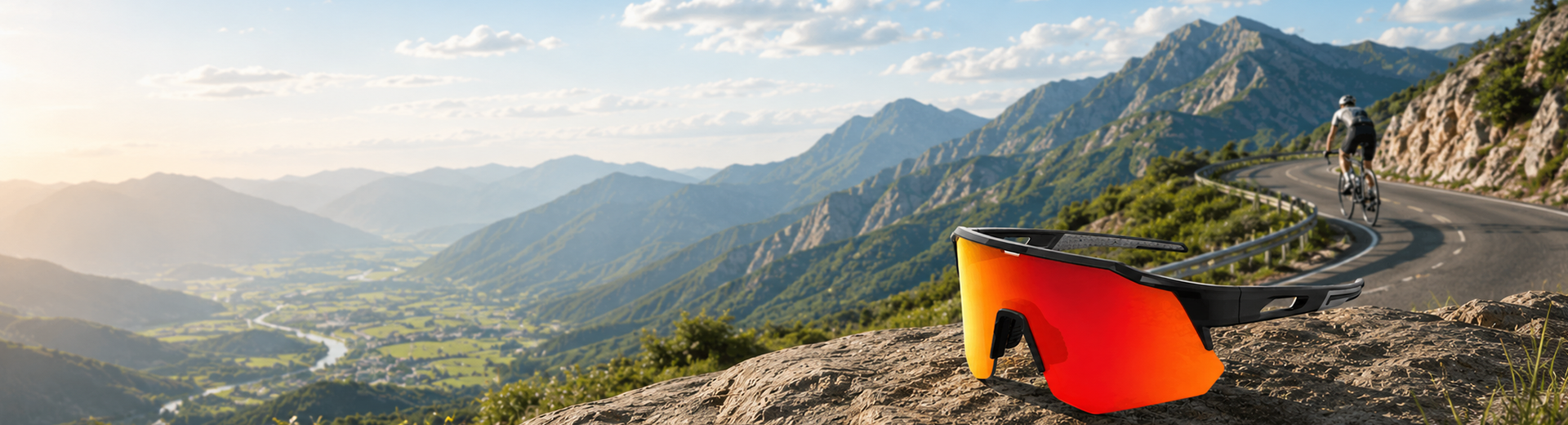
A polarized lens contains a filter that selectively reduces light traveling in particular orientations. Reflected glare from relatively flat surfaces can contain a strong polarized component, so the filter may reduce some of that unwanted brightness before it reaches the eyes.
The effect can be particularly noticeable on roads after rain. Wet asphalt may reflect sunlight toward the rider, creating bright patches that make the surrounding visual environment feel harsher. Similar reflections can occur around lakes, rivers, glass surfaces, and parked vehicles.
Polarization does not simply make everything darker. Its main purpose is to manage certain reflected light, while the overall visual result also depends on lens tint and transmission. A rider should consider these characteristics together rather than judging performance from polarization alone.
Open roads expose cyclists to more direct sunlight and reflected glare than shaded routes. Long stretches of pavement can produce persistent brightness, particularly around midday or during low-angle sunlight. In these situations, reducing reflected glare may contribute to greater visual comfort.
The benefit of polarized sunglasses for cycling can also vary according to the riding environment. A route beside water may produce stronger reflected light than a densely wooded trail, while an urban route introduces glass, vehicle panels, and other reflective surfaces.
Weather changes the equation as well. Polarized lenses designed for bright conditions may feel different under dense clouds or near dusk. A lens that manages strong glare effectively still needs an appropriate transmission level for the available light.
UV protection remains important because outdoor cycling can expose the eyes to ultraviolet radiation over extended periods. A suitable lens should provide the protection specified for its intended market and application rather than relying on polarization as a substitute for UV protection.
Lens color influences visual perception too. Gray-based tints generally preserve a more neutral impression of color, while other tint families can alter contrast and brightness. Riders who move between bright roads, shaded sections, and changing weather may prefer a lens designed around a broader range of conditions.
At YIJIA Optical, our cycling eyewear range includes polarized options with UV protection and lightweight materials, while we also support OEM and ODM customization for branding, colors, packaging, and bulk supply. The important point is that polarized cycling glasses should be evaluated according to the environment and optical requirements rather than selected solely because the word “polarized” appears in the specification.
A cyclist who mainly rides in heavily shaded areas may encounter relatively little reflected glare. In such circumstances, lens brightness and light transmission could be more relevant than polarization itself, especially if the route frequently passes beneath trees or through enclosed spaces.
Low-light riding presents another consideration. As daylight fades, reducing glare becomes less of a priority than maintaining sufficient visible light. A lens that works comfortably under strong sunshine may not provide the same visual experience later in the day.
Screen visibility can also matter to some cyclists. Certain displays use polarized light, and the interaction between a polarized lens and a particular screen orientation can sometimes affect how the display appears. Riders who rely on cycling computers or navigation devices should check compatibility with their own equipment.
Start with the route rather than the product label. Consider whether most rides take place in direct sunlight, near water, on wet roads, under trees, or across mixed terrain. The more reflected glare a cyclist regularly encounters, the more relevant polarization becomes.
The intended use of polarized sunglasses for cycling should also influence lens selection. Commuters, road cyclists, gravel riders, and recreational users can experience very different lighting conditions even if they all ride outdoors. There is no single lens configuration that suits every route equally well.
Fit deserves equal attention. Coverage around the eyes, frame stability, nose support, ventilation, and compatibility with helmets can affect comfort during extended rides. A technically sophisticated lens has limited practical value if the eyewear moves excessively or creates distracting pressure points.
Polarization is a useful optical feature, but its value depends heavily on where, when, and how a cyclist rides. Reflected sunlight from wet roads, water, vehicles, and other surfaces can make glare management worthwhile, while shaded routes and low-light conditions may place greater emphasis on transmission and overall visibility.
At YIJIA Optical, we develop cycling eyewear with these different riding environments in mind, combining lens options with UV protection, lightweight materials, and flexible customization. Riders considering polarized cycling glasses can make a more informed choice by matching lens characteristics to their actual routes instead of assuming that one feature determines the entire performance of the eyewear.

